


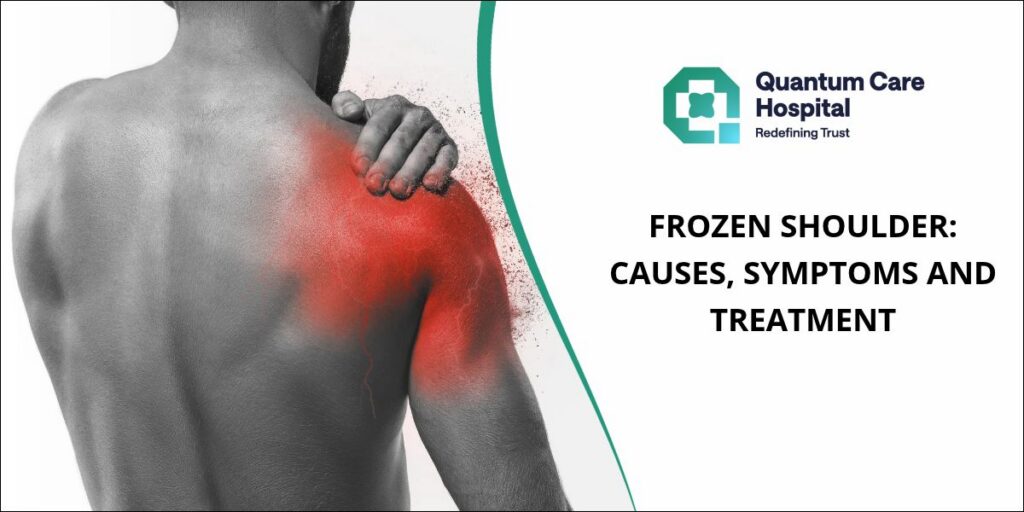
Frozen shoulder (adhesive capsulitis) is a condition in which the capsule surrounding the shoulder joint becomes inflamed, thickened and tight, causing shoulder pain and progressive stiffness that limits movement in all directions. It is more common between the ages of 40 and 60, in women and in people with diabetes or thyroid problems. It typically passes through freezing, frozen and thawing stages over many months. Treatment includes pain relief, guided exercises and physiotherapy, and in some cases injections or procedures.
This guide explains the causes, stages, symptoms, diagnosis and treatment of frozen shoulder.
The shoulder joint is surrounded by a flexible capsule of connective tissue. In frozen shoulder, this capsule becomes inflamed and then thickens and contracts, with scar-like bands forming. The space within the joint reduces, so the shoulder cannot move freely.
The exact cause is not always clear. Frozen shoulder can develop without any injury. Factors linked with a higher risk include:
Pain gradually increases, often worse at night and when lying on the affected side. Movement starts to reduce. This stage may last several weeks to months.
Pain may ease a little, but stiffness becomes more noticeable. Daily tasks such as combing hair, wearing a shirt or reaching a back pocket become difficult.
Movement slowly improves over months. Some people regain most of their movement, while others have some lasting stiffness.
Several shoulder problems can feel similar in the early stages, so a proper examination matters:
Shoulder pain can occasionally be linked to heart, lung or gallbladder conditions. New left shoulder pain with chest discomfort, sweating or breathlessness needs emergency care.
An orthopaedic doctor will ask about your symptoms and medical history and examine the shoulder. The key finding is reduced active and passive movement, especially turning the arm outwards. Tests may include:
Imaging services are available through the hospital’s radiology and imaging suite.
Pain-relieving and anti-inflammatory medicines may be prescribed for a limited time. Heat or ice packs can help ease discomfort before or after exercise.
Physiotherapy is a central part of treatment. Gentle stretching, pendulum exercises, wall crawls and assisted range-of-motion exercises help maintain and gradually improve movement. The programme is adjusted to the stage and pain level. Learn about physiotherapy and rehabilitation care.
A steroid injection into the shoulder joint may reduce pain and inflammation, especially in the early painful stage, making exercises easier.
Under guidance, common exercises include pendulum swings, finger walks up a wall, towel stretches behind the back and cross-body stretches. They are done gently, a few times a day, within a tolerable level of discomfort.
In some cases, fluid is injected into the joint to stretch the capsule, usually under imaging guidance.
If stiffness continues despite several months of treatment, options such as manipulation under anaesthesia or arthroscopic capsular release may be discussed with an orthopaedic surgeon.
What is frozen shoulder?
Frozen shoulder, or adhesive capsulitis, is a condition in which the capsule around the shoulder joint becomes inflamed, thickened and tight. It causes pain and gradually increasing stiffness that limits movement in all directions.
How long does frozen shoulder last?
Frozen shoulder often progresses through stages over many months. Many people improve gradually over one to three years, though the duration varies. Treatment aims to ease pain and help restore movement during this time.
Who is more likely to get frozen shoulder?
It is more common between 40 and 60 years of age, in women, in people with diabetes or thyroid disorders, and after a period of shoulder immobilisation following injury or surgery.
Is frozen shoulder the same as a rotator cuff problem?
No. Both cause shoulder pain, but frozen shoulder restricts movement even when someone else tries to move the arm for you. Rotator cuff problems usually cause pain and weakness, with assisted movement often preserved. An examination helps tell them apart.
Should I keep moving my shoulder if I have frozen shoulder?
Gentle, guided movement within a tolerable range is usually encouraged. Forcing the shoulder through severe pain can worsen inflammation. A physiotherapist can show you exercises suited to your stage.
When is surgery needed for frozen shoulder?
Most people improve without surgery. Procedures such as manipulation under anaesthesia or arthroscopic release may be considered when significant stiffness persists despite several months of treatment.
If shoulder pain and stiffness are affecting your sleep or daily tasks, a consultation with an orthopaedic doctor can help identify the cause and discuss suitable options. Quantum Care Hospital in Kharadi has an orthopaedic department along with physiotherapy, imaging and diabetes care.
You can also book an appointment online.




Choose Trusted Care for a Better Tomorrow

Quantum Care Hospital is a trusted multi-speciality hospital in Kharadi, Pune, committed to delivering high-quality healthcare services. With advanced diagnostic facilities and a patient-centric approach, the hospital provides comprehensive medical care while prioritizing safety, comfort, and effective treatment outcomes.
